Article Statistics
Due to the queen’s significance for honey beehive , a variety techniques to raise queens . These techniques are always being improved, and each beekeeper has the opportunity to do so as their skills and experience grow. because it is the most popular way to grow honey bees commercially.
Table of Contents
[ Hide ]Steps to raise queen bee

- acquiring day-old larvae from a variety with superior traits.
- Transfer the larvae to the vaccination cups
- Placing the shot cups in a powerful queenless sect (the starting sect).
- Moving the cups to the sects in Albania.
- Setting up the queens for promotion.
- Teaching the queens.It is the last step to raise queens.
Acquiring day-old larvae from a variety with superior traits.
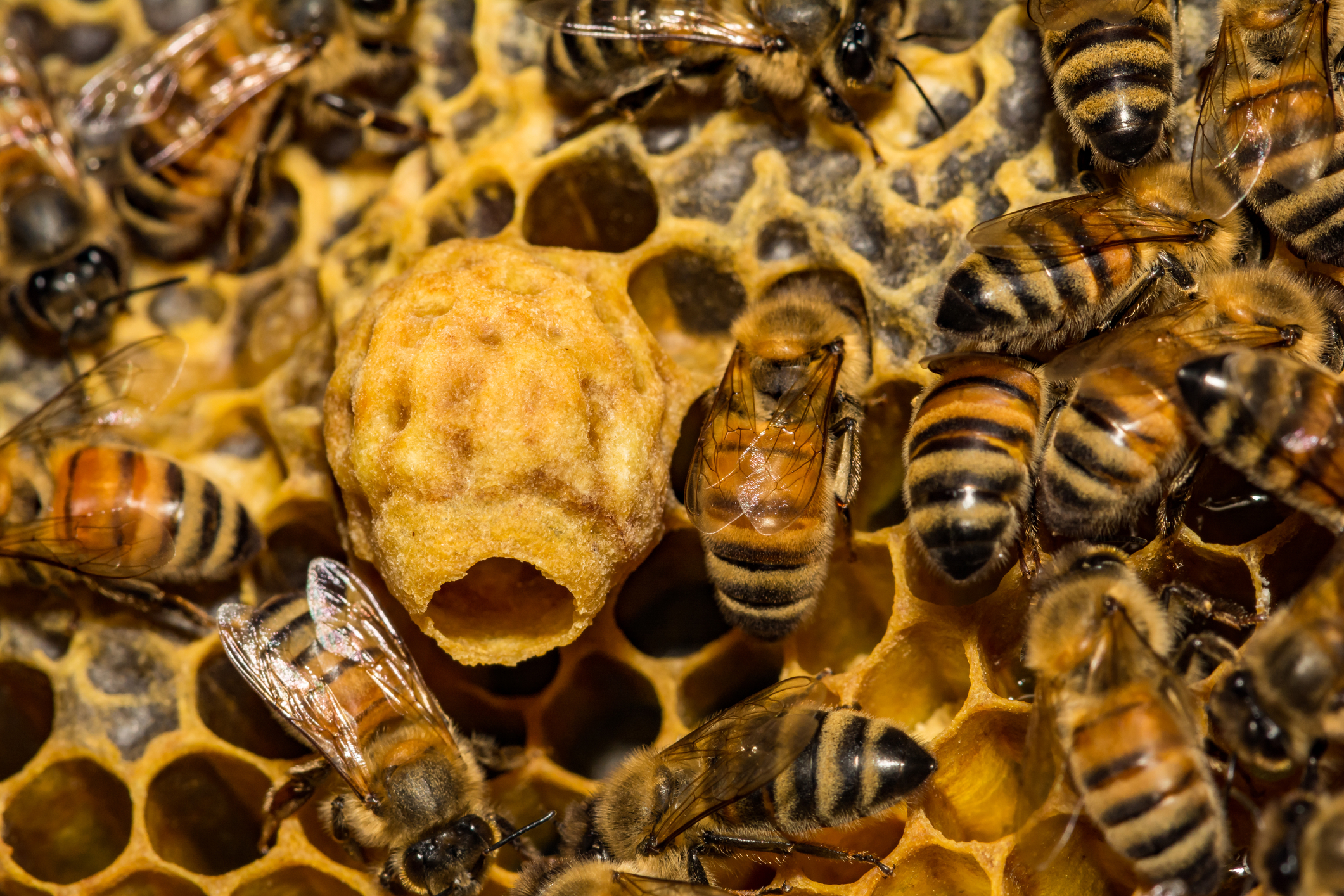
We deliver frames that have a longer base wax. In order for the queen of these sects to lay eggs in frames with an extended foundation, they are then placed in a sect with good attributes.
The beehive must meet the following criteria in order to be chosen: it must have a robust queen of good breeding, be disease-free, strong, and have an ideal egg-laying model.
And after the eggs are laid in this beehive on the second day, they are grown there for three days until we have day-old larvae, which are then used to raise queens. Alternatively, he may spend three days in the same caste as the noble queen, and on the fourth day he raises the frame with its day-old queens.
Types of methods to raise queens
To raise queens you should do the following, a vaccine needle is used to transfer the one-day-old larvae from the stool into the cups. There are two types of cups: wax and plastic. Plastic is preferred because it is easier to handle and since it is possible to use them repeatedly. And it should be remembered that the larvae are moved when they are in their initial position in the hexagonal eye before transferring the larvae. Also, The larva should be taken out, along with some of the royal food that was beneath it. And when transferring the larva to the cups, the larva may be transferred directly to the cup (the dry method) or put in the cup some royal jelly and water at a 1:1 ratio (the wet method), or the larvae are placed directly as in the dry method, after which the larvae are removed on the second day and no more larvae are laid (dual method). The quality of the resultant queen is considered to be significantly influenced by the food given to the larva, therefore the Indians, We were able to create queens with traits that are resistant to Varroa by grafting the larvae on queen food from Indian bees. Additionally, because Chinese royal jelly is the most affordable, it can be used during the immunization procedure.
The general vaccination procedures include:

- a frame of day-old larvae should be brought.
2. Bring some royal jelly in a little eye dropper, which you can dilute with some water.
3. Add a small amount of the food mixture to the cups’ eyes.
Training for the queens.
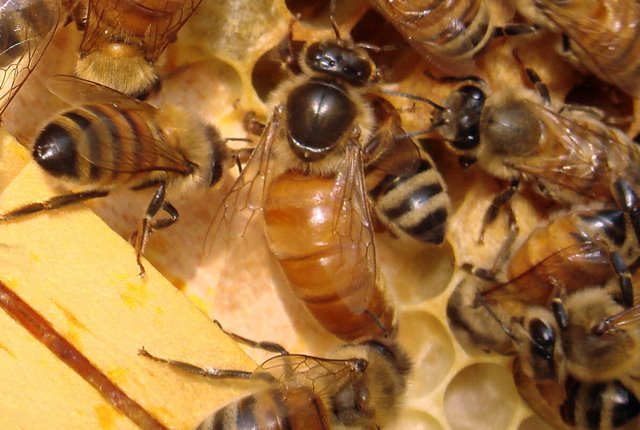
Queens are taught for a variety of reasons, such as making it simple to recognize the queen within the sect and to calculate the queen’s age, where a separate hue is given for each year of the years. White is used for years ending in 1 or 6, yellow is used for years ending in 2 or 7, red is used for years ending in 3 or 8, green is used for years ending in 4, blue is used for years ending in 0, and yellow is used to teach the queen to recognize when the queen has been replaced, changed, or if she has passed away.
These are the most important notes if you are planning to raise queens.
🛒 Mentioned Gear & Resources
- method Store / Gear
Found this guide useful? Share it as a reference!
Important Copyright Notice
All rights reserved to Bees Partners © 2026. Copying, republishing, translating, or extracting more than 10% of this material is strictly prohibited without prior written consent. For commercial or academic usage, please reach out via email: [email protected].