Article Statistics
We have tomorrow if there are bees.
Table of Contents
[ Hide ]- 1. We have tomorrow if there are bees.
- 2. Why Are Bees More Important Now Than Ever? 🌍
- 3. How Do Honey Bees Make Honey?
- 4. Eyes of Honey Bees
- 5. What is the sense of direction in honey bees?
- 6. In What Ways Do Honey Bees Gather Pollen?
- 7. Frequently Asked Questions (FAQ) ❓
- 8. 📚 References & Cited Sources
Bees are essential to the sustainability of existence. Despite their little size, they have a significant impact on our planet. Its advantages extend beyond honey production. Bee pollination is responsible for bringing much of the food we eat to life. In the natural world, bees play a significant role in the reproduction of trees and blooming plants. Our ecosystem’s health and continuity are preserved by these small animals.
“If the bee disappeared off the surface of the globe then man would only have four years of life left. No more bees, no more pollination, no more plants, no more animals, no more man.” – Albert Einstein
Why Are Bees More Important Now Than Ever? 🌍
- Global Food Security 📌 75% of the world’s food crops depend at least in part on pollination. Without bees, our diets would lose fruits, vegetables, seeds, and nuts.
- Economic Impact 📌 Bees contribute billions of dollars to the global economy annually. The agricultural industry relies heavily on managed honey bees for crop yields.
- Biodiversity 📌 They support the growth of trees, flowers, and other plants, which serve as food and shelter for large and small creatures.
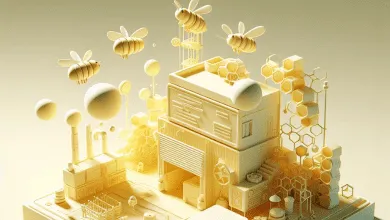
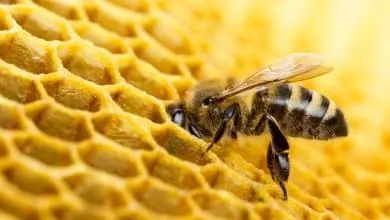
Communication of Honey Bees
 |
| Complex communication methods of honey bees. |
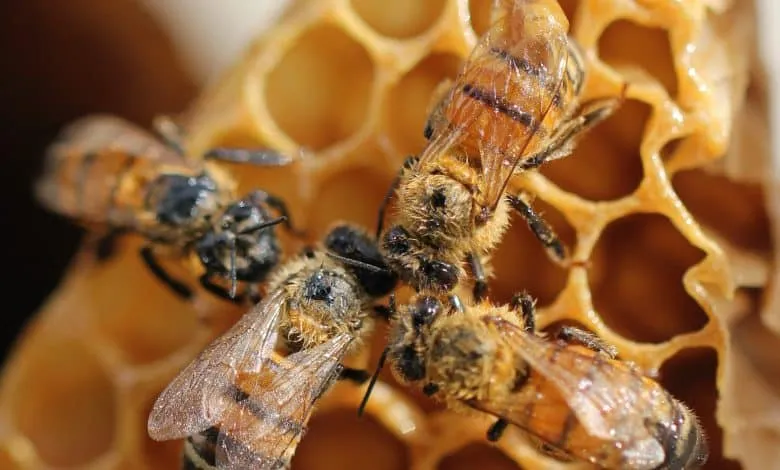
Bees have extremely sensitive feet and legs that can feel vibrations. Through their antennae, they are able to detect various odours, identify one another, and distinguish between various species. The fact that a bee cannot enter another hive is the most evident indication of this. Guard bees ensure the safety of the hive and prevent the bee from another hive from entering their own hive.
The bees use a kind of fanning system to ventilate the hive each time they flap their wings. It has been discovered that the bees’ chests are where the sound actually originates, despite the fact that it appears to emerge from their wings.
Advanced Bee Behaviors & Social Structure 🐝
- The Waggle Dance 👈 This is a sophisticated navigation system. A forager bee dances in a figure-eight pattern to tell other bees the direction and distance of nectar sources relative to the sun.
- Thermoregulation 👈 Bees maintain a constant hive temperature. In winter, they form a cluster to generate heat. In summer, they fan their wings to cool the hive, acting as a biological air conditioning system.
- Swarming 👈 This is the natural method of reproduction for honey bee colonies. When a hive becomes overcrowded, the queen leaves with a large group of worker bees to form a new colony.
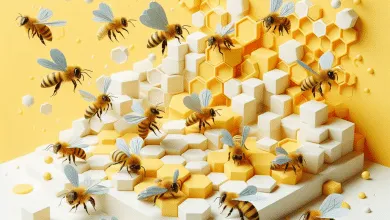
How Do Honey Bees Make Honey?
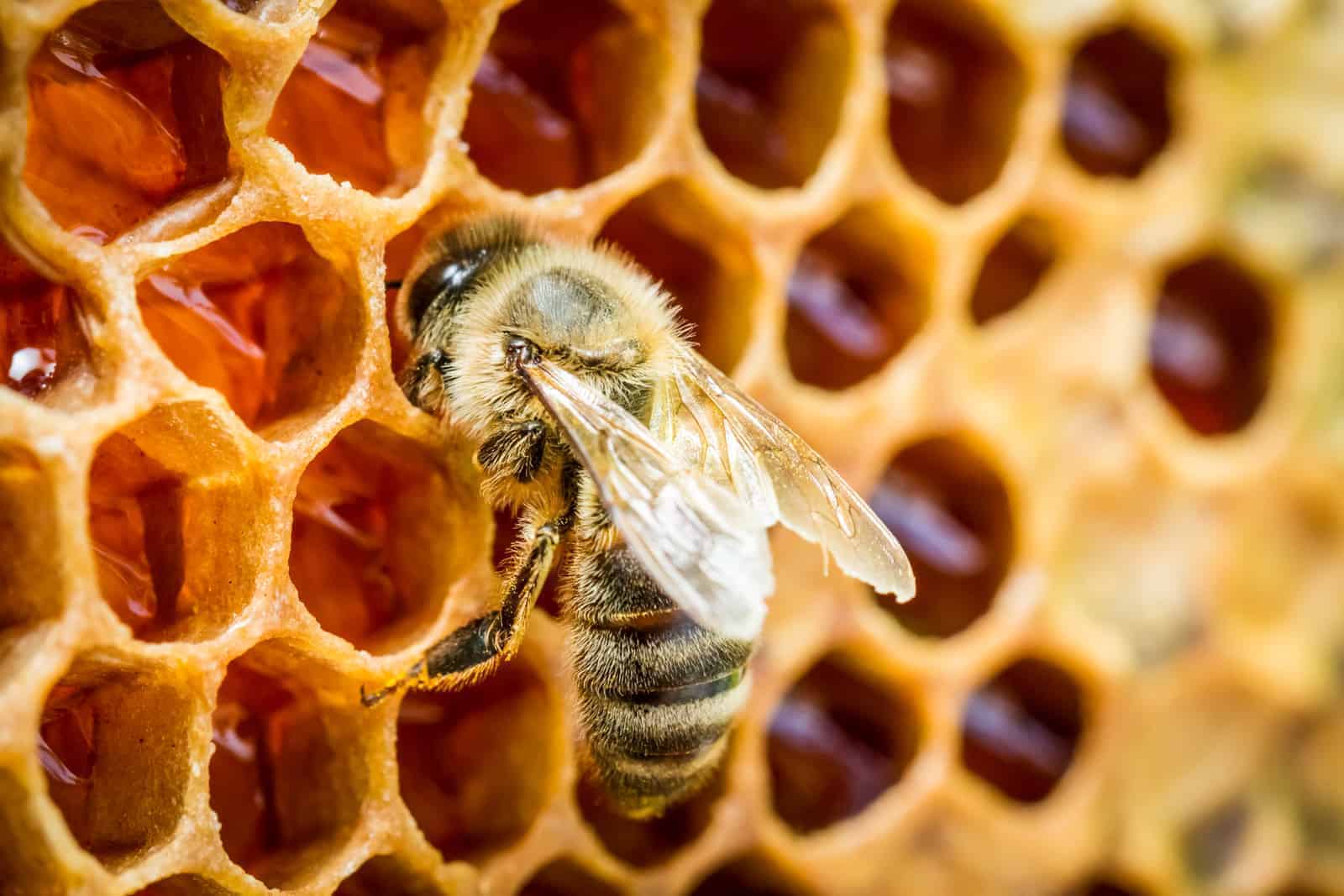 |
| The fascinating process of honey production. |
A hive is home to worker bees, queen bees, and drone bees. Honey bees live an average of 1.5 months. Depending on the species, queen bees can live for 2 to 7 years while male bees only live for six months. In an average lifetime, a worker bee may generate one-twelfth of a teaspoon of honey. A honey bee can fly at an average speed of 24 km per hour.
Blue may be distinguished by honey bees, although they mistake the color black for red and dark gray. This explains why many beekeepers prefer using blue hives. They gather the essence of more than a hundred million flowers to fill a honeycomb in the hive. They flap their wings for 90–100,000 miles while carrying out this operation.
A hive can house up to 90 thousand bees, if we consider their daily lives inside the structure. Male bees solely exist to reproduce. By mating with the queen bee, they maintain the hive’s existence. Additionally, worker bees leave the hive to find food if it runs out.
Common Threats & Mistakes Affecting Bees ⚠️
- Pesticide Usage: Neonicotinoids and other systemic pesticides can disorient bees, making it impossible for them to find their way back to the hive.
- Habitat Destruction: Urbanization and monoculture farming reduce the diversity of flowers available for bees to forage.
- Climate Change: Rising temperatures shift the blooming times of flowers, causing a mismatch between when bees emerge and when food is available.
- Diseases and Pests: The Varroa destructor mite is a major killer of honey bee colonies, transmitting viruses that deform wings and shorten life spans.
Eyes of Honey Bees
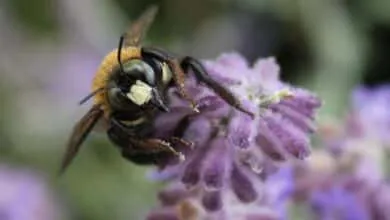
| Close-up of the complex eye structure. |
To stop other bees from returning, honey bees wrap the flowers from which they collect pollen with a unique electrical field. Other bees pass by the flower whose pollen is finished, without returning, due to their sensors’ awareness of this electrical field, and move on to other flowers. They don’t feel that their time is wasted.
Some bees stay away from their nests while they are ill. They lose their sense of direction and pass away on their own. When sick or infected, they don’t defend other bees by going back to their nests.
What is the sense of direction in honey bees?
Strategies to Help Bees Thrive ✅
- Plant a Bee Garden 🌻 Plant native wildflowers that bloom at different times of the year to provide a steady food source. Lavender, sunflowers, and mint are great choices.
- Go Organic 🚫 Avoid using synthetic pesticides, herbicides, and fertilizers in your garden. Natural alternatives are safer for pollinators.
- Provide Water 💧 Bees get thirsty! Create a bee bath by filling a shallow dish with water and pebbles (so they have a place to land).
- Support Local Beekeepers 🍯 Buy raw honey from local apiaries. This supports sustainable beekeeping practices in your community.
In What Ways Do Honey Bees Gather Pollen?
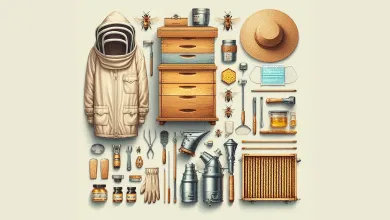
| Pollen collection mechanism. |
A bee flutters its wings 250 times per second, covers 3 million kilometers, and visits all the flowers while carrying a liter of honey. 50–100 flowers are visited at a time by a honey bee. A honeycomb’s eye has a depth of 12 mm, but even when it is loaded with honey, it doesn’t change in any manner.
A honey bee has the ability to complete 10 trillion operations in the same amount of time as one of the fastest computers in the world while using less energy (16 billion fewer operations per second). One of nature’s most stunning creatures, honey bees can process information one hundred million times more quickly than even the most advanced computer on the market right now.
Frequently Asked Questions (FAQ) ❓
The lifespan depends on the caste. Queens can live 2-7 years, drones live a few months, and worker bees live about 6 weeks in summer but several months in winter.
2. Do all bees sting?
No. Drones (male bees) do not have stingers. Worker bees will sting if threatened, but they die afterwards. The queen has a stinger but rarely uses it.
3. How much honey does one bee make?
In her entire lifetime, a single worker bee produces only about 1/12th of a teaspoon of honey. This emphasizes the power of their collective effort.
4. What is the difference between nectar and pollen?
Nectar is a sugary liquid that bees convert into honey for energy (carbohydrates). Pollen is a powder that provides protein and nutrients for raising young bees.
5. Why do beekeepers use smoke?
Smoke calms the bees by masking alarm pheromones. It also triggers a feeding instinct, making them less likely to sting while the beekeeper inspects the hive.
In conclusion, the honey bee is not just an insect; it is a vital pillar of our global ecosystem. From their complex communication dances to their tireless work in pollination, bees demonstrate the power of unity and hard work. Preserving their existence is not just about saving a species; it’s about saving our own future.
Take Action Now! Start by planting a bee-friendly flower in your garden today, or support a local beekeeper. Every small step counts in the mission to save the bees. Let’s ensure that we indeed “have tomorrow” by protecting the bees today.
📚 References & Cited Sources
- antennae Source
Found this guide useful? Share it as a reference!
Important Copyright Notice
All rights reserved to Bees Partners © 2026. Copying, republishing, translating, or extracting more than 10% of this material is strictly prohibited without prior written consent. For commercial or academic usage, please reach out via email: [email protected].